2026 Partial Solar Eclipse
The solar eclipse of 12th August 2026, as seen from Germany. I was not in the path of totality.
This picture was taken at 20:00, about 15 minutes before maximum coverage. I believe this is actually the most interesting one: Not only are there a couple of sunspots visible, at the edge of the moon you can also make out the mountains on its surface:
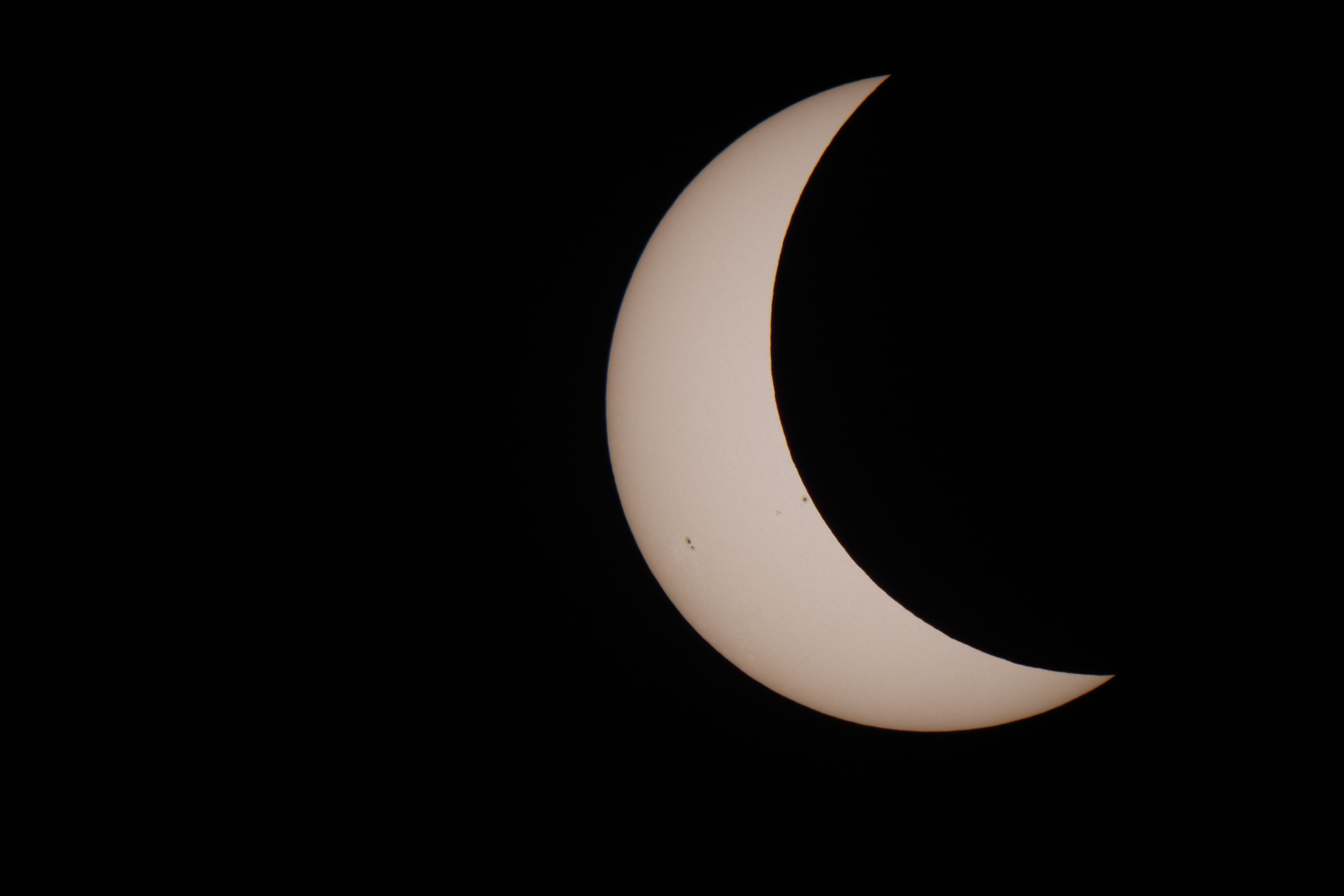
[Click for full resolution]
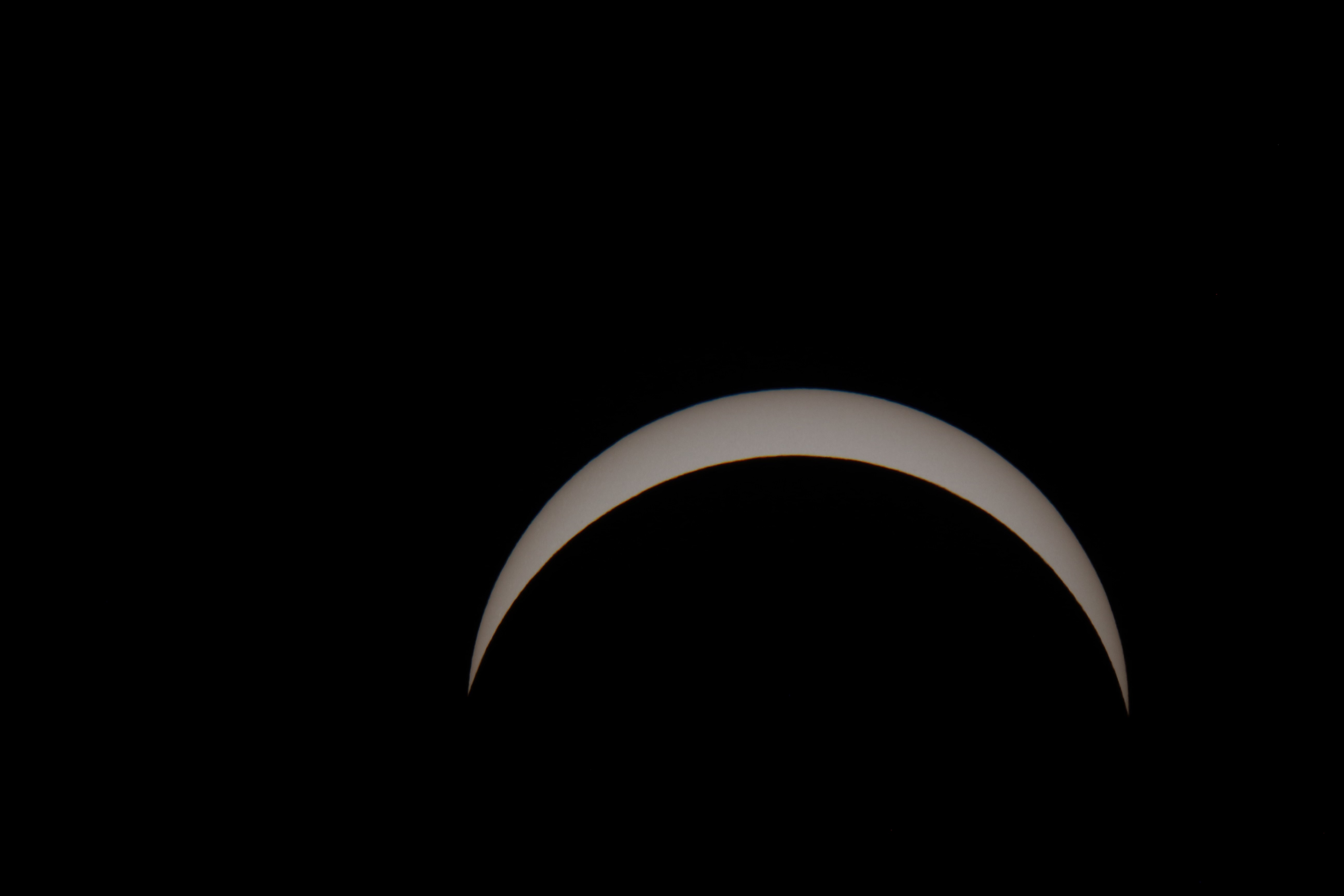
[Click for full resolution]
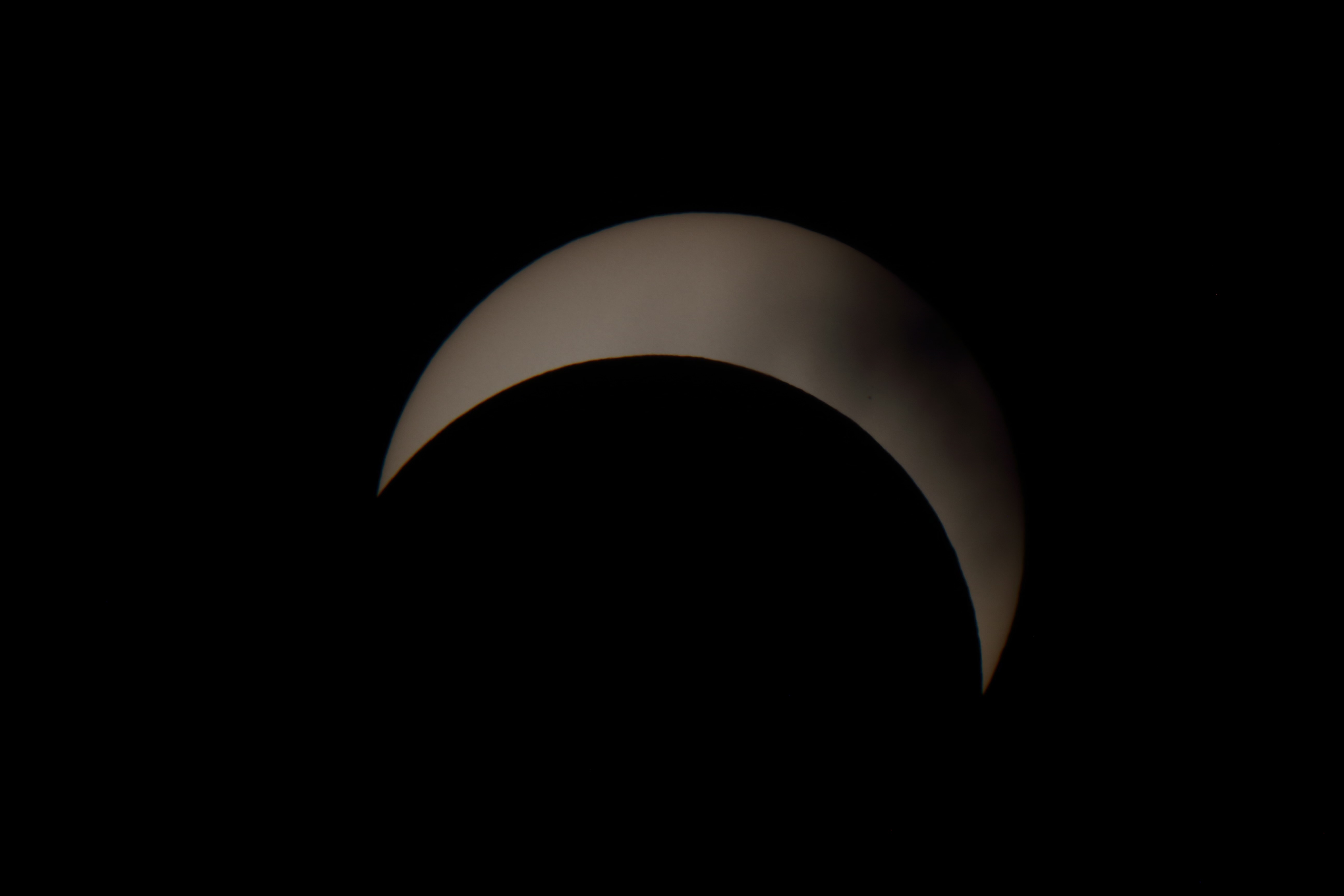
[Click for full resolution]
Image Metadata
This applies to all three photos above.| Telescope | Skywatcher Skyliner 200/1200 |
| Filter | Baader AstroSolar | Camera | Canon EOS 1200D |
| Exposure | 1/320s @ ISO 100 |
| Resolution | 5184 x 3456 / 18 MPX |
| Seen from | Oberhausen, Germany |
During maximum coverage at around 20:13. The sun didn't look a lot dimmer than usual, but the light felt different. The feeling is difficult if not impossible to capture on camera, and hard to describe at all. It just felt and looked a little stranger than usual. The light must have been sharper.

[Click for full resolution]
The Setup
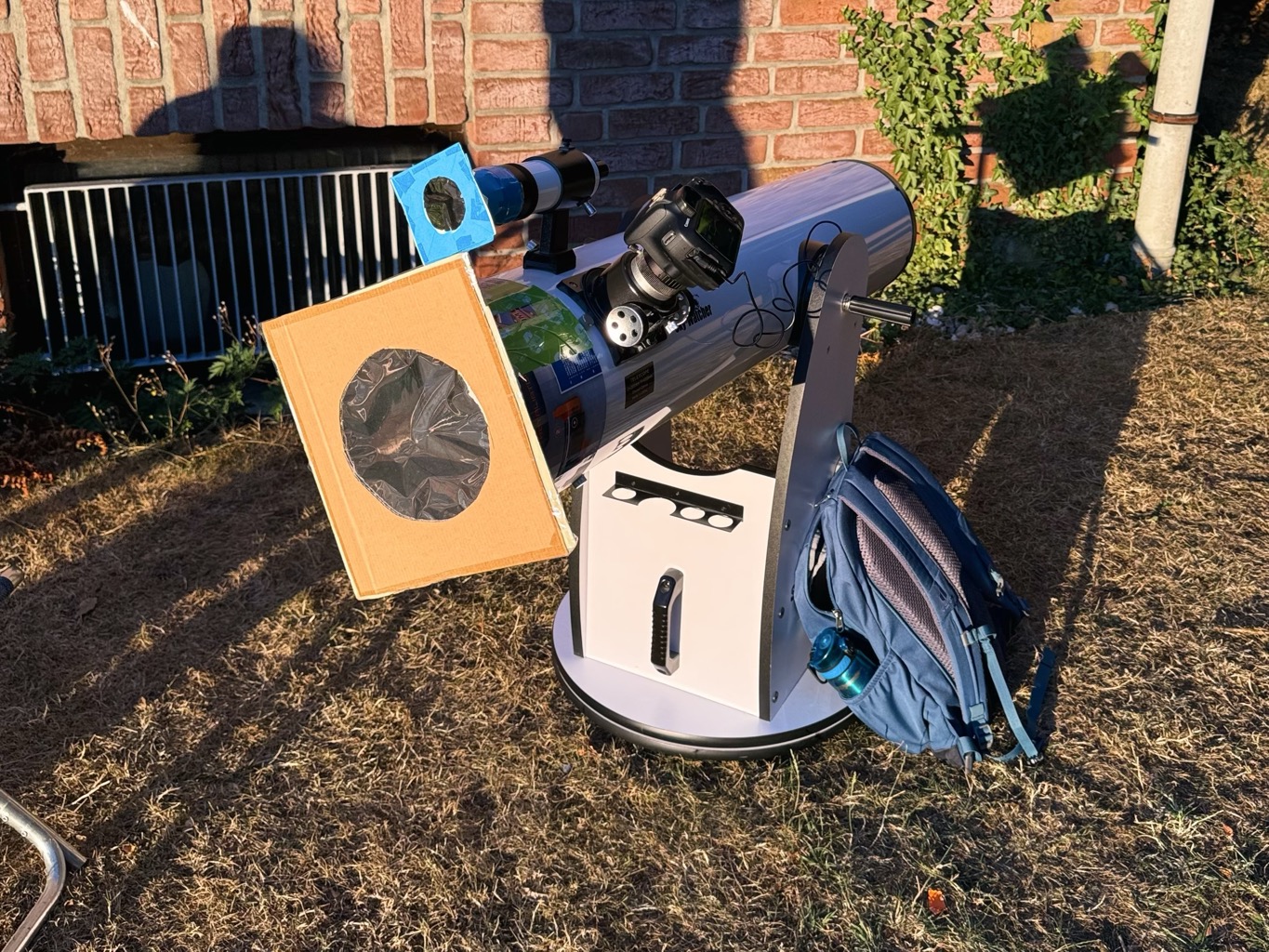
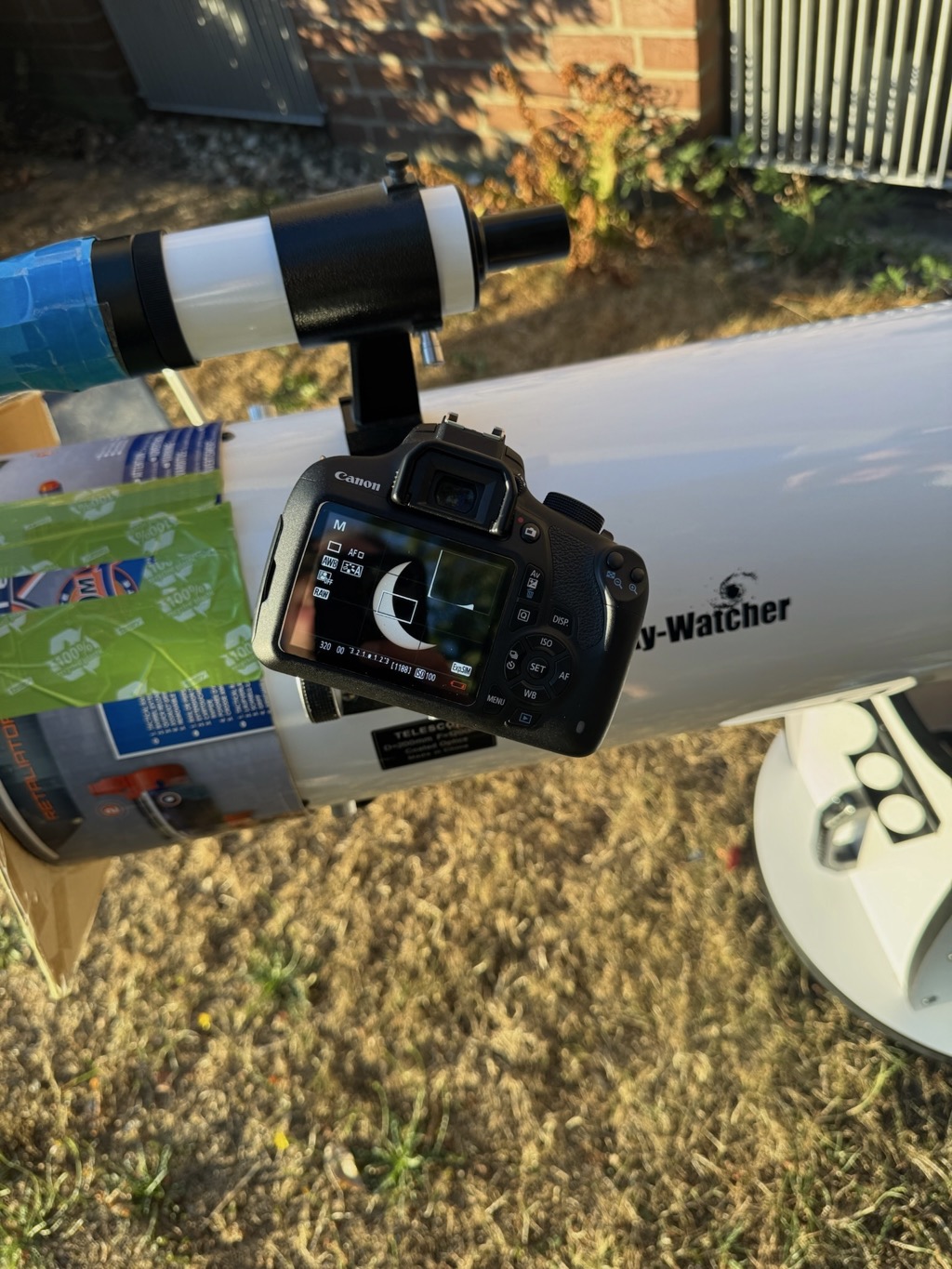
Pictured below is my telescope with solar filters and the camera attached. This is the actual position I had to use to see the eclipse — the sun was so low in the sky that the telescope had to be almost parallel to the ground.
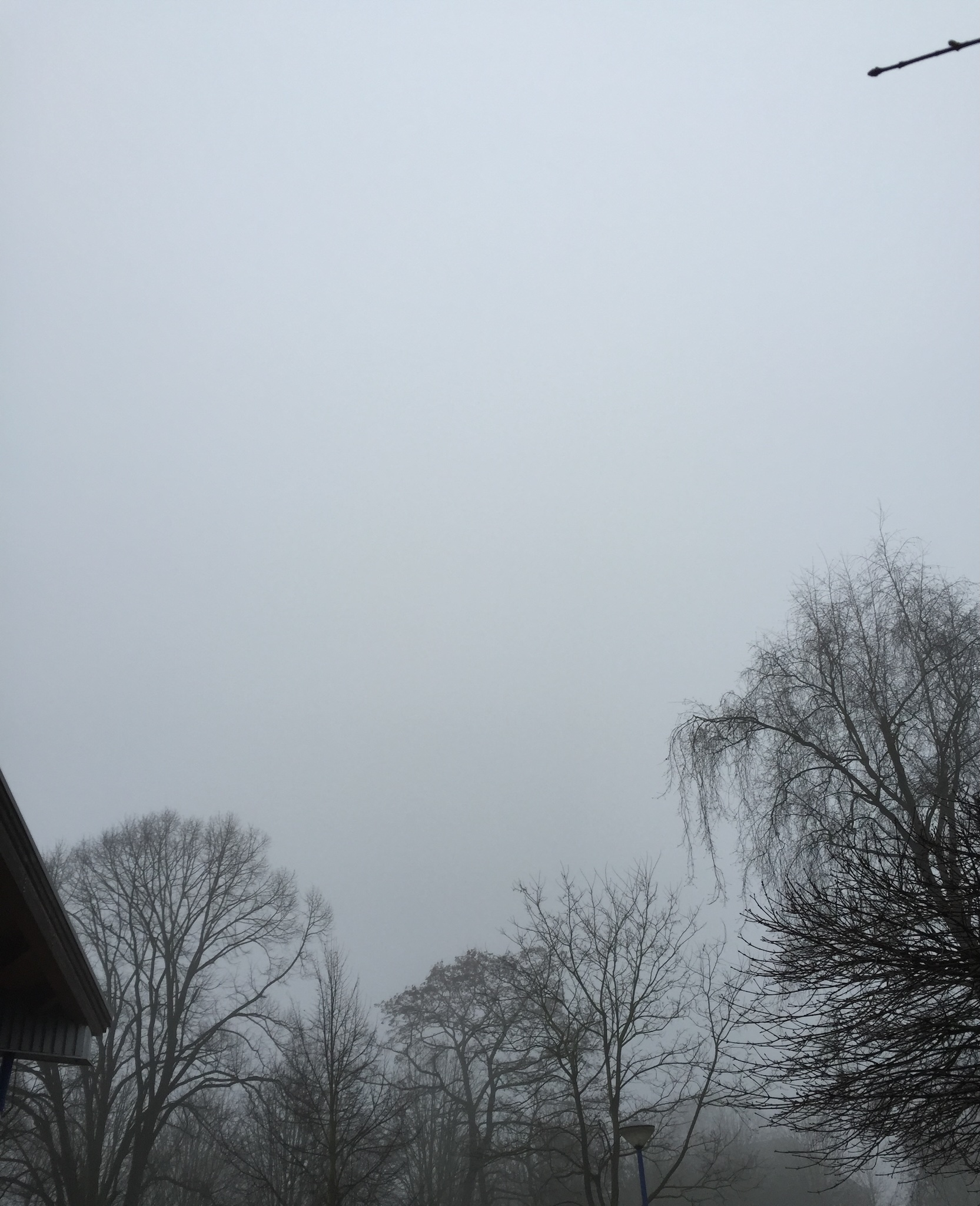
The cardboard housing of both filters is homemade (obviously), but the most important part, the film that actually does the filtering, is not. I originally made the filters to see the solar eclipse of 2015, which fell through thanks to bad weather (also pictured below). Despite their appearance, they have held up remarkably well.
The wire snaking away from the camera belongs to a remote control. I use this to reduce shaking compared to pressing the shutter button on the camera itself, which can be a real issue when shooting through a telescope.